Planning, 3 min read
Weekly meal planning for people who hate meal planning
A 15-minute Sunday routine that doesn't require a spreadsheet, a colour-coded calendar, or eating the same four dinners forever.
Most meal planning advice is written by people who enjoy meal planning. It involves a printable template, a themed week (Meatless Monday, Taco Tuesday), and batch-cooking six identical containers of chilli on a Sunday afternoon.
If that's you, brilliant, carry on. If the sight of a colour-coded meal planner makes you want to order pizza, here's the version that works for the rest of us. It takes about 15 minutes a week.
Plan five dinners, not seven
The classic mistake is planning all seven days. Then Wednesday runs late, you get a takeaway, and now there's an unused portion of salmon making you feel guilty on Friday.
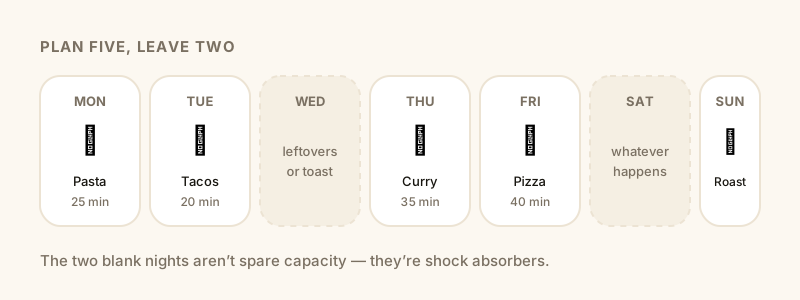
Plan five. Leave two nights deliberately blank for leftovers, toast, or whatever happens. A five-dinner plan you follow beats a seven-dinner plan you abandon on day three — and it means you're not throwing food away, which is where the actual money goes.
Pick from what you already cook
You don't need new recipes every week. Most households have somewhere between 10 and 20 dinners they genuinely like, and a good week is mostly those, plus one new thing if you're feeling it.
So the planning question isn't "what shall we eat" from an infinite menu. It's "which five, from the list of things we already know how to cook, fit this week". That's a much smaller question and it takes about two minutes.
If your regulars are scattered across screenshots and saves, pull them into one place first — the whole routine falls apart when picking five recipes means opening four apps.
Match the recipe to the night
This is the step that makes plans survive. Look at the week before picking dishes:
- Late night, gym, kids' activities → something under 30 minutes, or a leftover night
- Normal evening → your standard rotation
- The one night with time → the roast, the thing that takes two hours, the new recipe
Assign dishes to nights based on how much time you'll actually have, not on an idealised week. A 90-minute recipe scheduled on the night you get home at eight is how plans die.
This is also why the "how long does it take" folder structure beats a cuisine-based one — you're choosing by time available far more often than by cuisine.
Shop once, from a merged list
Once you've got five recipes, the shopping should take no thought. Merge all the ingredients into one list, grouped by section, with duplicates added together — here's the full method.
Doing this by hand is about ten minutes of fiddly arithmetic. It's also the step people skip, which is how you end up going to the shop three times in a week and buying a fourth jar of cumin.
CookinBuddy does this bit automatically: pick your five, and the list builds itself, sorted the way you walk the store, shared with whoever else is shopping. Free on iPhone.
Check the fridge before you write the list, not after
Thirty seconds. Look in the fridge, the freezer and the veg drawer, and build the week partly around what's already there and about to turn.
This single habit does more for a food budget than any amount of coupon clipping, and it costs half a minute.
The 15-minute routine, start to finish
- Look at the week. Which nights are busy? (2 min)
- Check the fridge and freezer. What needs using? (1 min)
- Pick five dinners from your regulars, matched to those nights, plus one new one if you fancy it. (5 min)
- Merge the ingredients into one aisle-sorted list. (5 min by hand, or instantly if an app does it)
- Leave two nights blank. On purpose. (0 min)
That's it. No template, no theme nights, no batch cooking unless you like batch cooking.
What to do when it falls apart anyway
It will, regularly. Someone gets ill, work explodes, you just don't fancy the thing you planned.
The recovery move is not to re-plan the week. It's to move the unaffected dinners along by a night and use one of your two blank nights. The ingredients are already in the fridge; nothing is wasted. This is the entire reason for leaving the two nights free — they're not spare capacity, they're shock absorbers.
A plan that bends survives. A plan that has to be executed perfectly gets thrown out on Tuesday.